Gemstone Durability: Hardness, Toughness, Stability
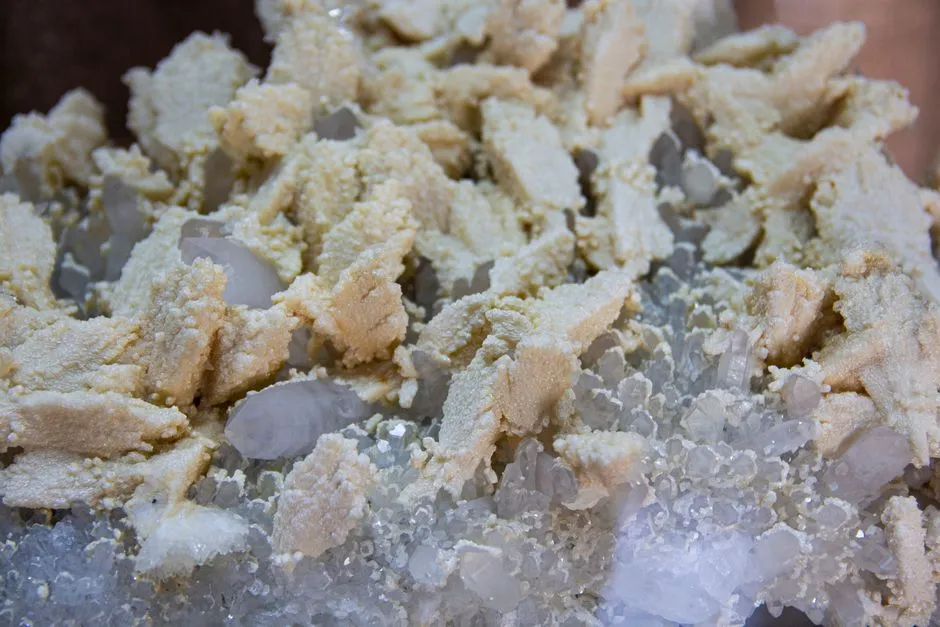
- A durable gemstone needs more than a high Mohs number
- What does the Mohs scale actually tell you?
- Why can a hard gemstone still chip?
- What does gemstone stability cover?
- How do familiar gemstones compare?
- Which gemstones are durable enough for a ring?
- Use a five-question durability profile before choosing
- Match care to the whole piece
A durable gemstone needs more than a high Mohs number
Gemstone durability has three parts: hardness, toughness, and stability. Hardness describes resistance to scratches and abrasion. Toughness describes resistance to chips, cracks, and breaks. Stability describes resistance to heat, light, chemicals, and changes in humidity. A stone can score highly in one area and remain vulnerable in another, so a Mohs number alone cannot tell you whether it suits a frequently worn ring.
That three-part definition comes from the Gemological Institute of America's guide to gem durability. It is the most useful way to move beyond the familiar but incomplete idea that "hard" means "hard to damage."
| Property | What it measures | Typical damage | The useful question |
|---|---|---|---|
| Hardness | Resistance to scratching and abrasion | A dulled polish, worn facet edges, surface scratches | What can scratch this material during wear or storage? |
| Toughness | Resistance to breaking and chipping | A chipped point, cracked stone, or split along a weak direction | How well does it survive impact and pressure? |
| Stability | Resistance to heat, light, chemicals, and humidity changes | Colour change, crazing, damaged filler, dehydration, or a new fracture | What environments and cleaning methods can alter it? |
Durability is therefore a profile, not a single score. That profile also depends on the particular stone: its inclusions, treatments, cut, exposed edges, and setting can all change the practical risk.
What does the Mohs scale actually tell you?
The Mohs scale ranks minerals by relative scratch resistance. A harder reference mineral can scratch a softer one. Talc sits at 1, quartz at 7, corundum at 9, and diamond at 10. Our fuller guide to the Mohs hardness scale explains how the reference minerals are arranged.
The intervals are not equal. A diamond at 10 is not merely ten percent harder than corundum at 9, and a mineral at 8 is not twice as hard as one at 4. GIA specifically cautions that diamond is many times harder than corundum even though only one Mohs step separates them.
Mohs hardness is still useful. It helps predict how readily ordinary contact may abrade a polish or soften facet junctions. It also explains why mixed jewelry should not be dropped loose into one compartment: a harder gemstone can scratch a softer neighbour. Separate pouches or divided compartments reduce that contact.
What Mohs hardness does not measure is just as important. It does not tell you whether a sharp blow will chip the stone, whether a cleavage direction makes it easier to split, or whether heat from repair work will harm a treatment. Those questions belong to toughness and stability.
Why can a hard gemstone still chip?
Toughness is the ability to resist breaking and chipping. It depends on crystal structure and bonding, and it does not rise neatly with Mohs hardness.
Diamond is the clearest example. It is the hardest natural mineral, yet GIA describes it as only somewhat tough. Its crystal has cleavage planes: directions in which the atomic bonding is weaker. A force applied in an unfortunate direction can therefore chip or split a diamond. The GIA discussion of diamond chipping notes that points, corners, girdles, and areas near some inclusions can be especially vulnerable.
Cleavage is a mineral's tendency to break along particular crystallographic planes. Fracture is breakage that does not follow a cleavage plane. Brittleness describes a tendency to break rather than bend or deform. These ideas overlap in practical care, but they are not synonyms for low hardness.
Topaz makes the same lesson visible from another direction. It ranks 8 on the Mohs scale, above quartz, but GIA rates its toughness as poor and recommends protective mountings or jewelry that sees less wear. A high scratch-resistance number has not removed its breakage risk.
What does gemstone stability cover?
Stability is resistance to environmental change. The stress may be sudden, such as thermal shock, or gradual, such as prolonged light exposure. It may also come from a cleaning product that is harmless to the metal but unsuitable for the gem or its treatment.
GIA identifies heat, light, household chemicals, and humidity as durability factors. Its guide notes, for example, that sudden temperature change can damage gems including opal and tanzanite, while prolonged light can change the colour of some amethyst, kunzite, and topaz. These are material-specific cautions, not a reason to assume every coloured gem reacts the same way.
Treatments add another layer. A coating, dye, oil, resin, or fracture filler may respond differently from the host material. Emerald illustrates the point well: it is 7.5 to 8 on the Mohs scale and has fair to good toughness, but heat can extend existing fractures, while light or chemicals can alter fillers. GIA's emerald care guidance advises against ultrasonic and steam cleaning because fashioned natural emeralds commonly contain filled fractures.
Ask what the stone is, whether it is treated, and whether the care instructions account for that treatment. If the answers are uncertain, do not experiment with heat, chemicals, steam, an ultrasonic cleaner, or a scratch test. A credentialed gemologist can identify the relevant risks without turning the jewelry into a home test sample.
How do familiar gemstones compare?
The table below is a starting profile, not a universal wear guarantee. Individual inclusions, treatments, cut geometry, and setting still matter.
| Material | Mohs hardness | Toughness and stability notes | Practical reading |
|---|---|---|---|
| Diamond | 10 | Extremely hard and very stable, but only somewhat tough; cleavage and exposed points create chip risk | Excellent scratch resistance does not make it impact-proof |
| Ruby and sapphire (corundum) | 9 | Excellent toughness, no cleavage, and stable under normal wearing conditions when untreated or conventionally heat treated | A strong all-round profile, with extra care for filled or dyed material |
| Topaz | 8 | Poor toughness despite high hardness; some treated colour can fade with prolonged heat or sunlight | Protect it from blows and use warm soapy water rather than steam or ultrasonic cleaning |
| Emerald | 7.5-8 | Fair to good toughness; fractures and fillers can be sensitive to heat, chemicals, steam, and ultrasound | The treatment history is part of the durability profile |
| Opal | 5-6.5 | Very poor to fair toughness; high heat and sudden temperature change can cause fracture, while intense-light heat can cause crazing | Suitable for jewelry, but it needs careful wear and warm soapy water only |
| Pearl | 2.5 | Very soft, though usually good in toughness; heat, acids, cosmetics, perfume, and dehydration can damage it | Prevent abrasion and chemical contact rather than judging it by toughness alone |
The corundum figures and treatment cautions come from GIA's sapphire care guide. Its distinction matters: untreated and heat-treated sapphire is highly durable, but fracture-filled, cavity-filled, or dyed material needs different cleaning. A species name by itself may not be a complete care instruction.
For opal, GIA gives a variable hardness of 5 to 6.5 and very poor to fair toughness. Its opal care guide also warns about high heat and sudden temperature changes. Pearl reverses the usual assumption in another useful way: GIA lists its hardness at only 2.5 but says toughness is usually good. The vulnerability is chiefly to scratching, heat, dehydration, and chemicals, as detailed in its pearl care guide.
Which gemstones are durable enough for a ring?
There is no single hardness cutoff that makes a gem suitable for every ring and every wearer. Start with exposure. A ring worn daily at a desk faces a different pattern of contact from one worn during lifting, gardening, workshop tasks, or sport. Removing jewelry before impact-prone work lowers risk for every stone, including diamond.
Then consider the stone's vulnerable geometry. Points, corners, thin girdle areas, existing fractures, and surface-reaching inclusions can concentrate stress. A setting that surrounds more of the edge may reduce exposure, but setting work itself requires skill and no mounting makes a gemstone unbreakable. Ask a qualified jeweler whether the proposed design protects the particular stone rather than relying on a generic setting label.
Frequency matters too. A fragile gem can be entirely reasonable in an occasional-wear ring when the owner accepts careful handling. The same stone may be a poor match for jewelry expected to stay on through every task. "Durable enough" is a match between material, construction, use, and maintenance, not a prize awarded by the highest number.
Use a five-question durability profile before choosing
For a loose gemstone or finished piece, collect five answers:
- What is the material? Confirm the species or organic gem material, not only a trade colour name. If identification is uncertain, start with how gemstones are identified and use a gemologist for a consequential decision.
- What is its Mohs hardness? Treat this as scratch-resistance information, not a total durability grade.
- What are its toughness, cleavage, and fracture concerns? Ask about vulnerable directions, inclusions, points, corners, and thin edges.
- What affects its stability? Check heat, rapid temperature change, light, moisture, acids, household chemicals, steam, and ultrasound individually.
- Has it been treated? Obtain the seller's treatment disclosure and care instructions in writing. A treatment can change cleaning and repair limits even when the underlying gem species is normally robust.
If one answer is unknown, record it as unknown. Do not fill the gap with an assumption based on colour, price, or sales language.
Match care to the whole piece
Jewelry care must account for the gemstone, treatments, setting, and stringing materials together. The safest method for one component may be unsuitable for another. Our gemstone jewelry cleaning guide starts with identification and treatment status for that reason.
Three habits are broadly useful: store pieces separately, remove rings before impact-prone or chemical-heavy tasks, and inspect settings for looseness or damage. Beyond those basics, follow gem-specific guidance. Do not assume that steam or an ultrasonic cleaner is safe because a gem has a high Mohs number. Do not use one stone to scratch another. Home testing can leave permanent damage while still producing an ambiguous answer.
When a gem is valuable, unidentified, visibly fractured, treated, or set in a complex piece, ask a credentialed gemologist or experienced jeweler to choose the cleaning and repair method. Durability is not a verdict that a stone is safe or unsafe. It is a map of the ways damage can happen, and a better basis for choosing how the jewelry should be worn and cared for.